![[personal profile]](https://www.dreamwidth.org/img/silk/identity/user.png)
Palmerton. John O'Hara. Poignancy.
Aug. 16th, 2018 10:36 amBB and I did a daytrip to Palmerton, a strange little town approximately 150 miles southwest of the Hudson Valley in the coalmining hills of Pennsylvania.
BB discovered Palmerton when he was doing the Appalachian Trail, which loops off Blue Mountain and down into the Lehigh Valley there.
When I got home and did the research, I realized I knew Palmerton from before, too. Well. Not Palmerton exactly. But places very close to it.
Because I’d been a big, big, big John O’Hara fan growing up.
And Palmerton is only 40 miles north of Pottsville, O’Hara’s fictional Gibbsville.
###
I couldn’t tell you why I liked John O’Hara so much when I was 12. Obviously, O’Hara’s favorite themes—class, social status, money, alcohol abuse, deeply repressed sexual urges—went right over my head.
I think it was something about the way O’Hara wrote dialogue. It left out more than it included, and that intrigued me. Seemed to me at the age of 12 that people in real life very seldom talked about the things that were important and that this was something fiction almost always got wrong. In fiction, people were always talking about the important things. But people didn’t in real life.
O’Hara’s characters never talk about important things.
Instead their conversation is steeped in ghastly provincialism. I suppose you could call O’Hara a kind of Zola of the American petit-bourgeoisie. His short stories, which are really excellent, amount to a secret history of the lives of white American males in the 1940s and 1950s.
O’Hara wrote about stuff that had happened approximately 40 years before I was born. Then, of course, 40 years seemed like an incalculably long amount of time—first Caesar invaded omnia Gallia, and then it was 1915—but 40 years ago from now is 1978, and I remember 1978 with Technicolor clarity.
(I try to keep that in mind when I’m hanging out with much younger friends: that events of profound relevance to me, to them are marginalia on a crumbling, moldy page.)
I think people do still read writers like Raymond Carver who started off by imitating O’Hara.
But nobody reads O’Hara anymore. He’s one of those writers who’s been completely forgotten.
###
Anyway.
Palmerton is in (I kid you not) Carbon County.
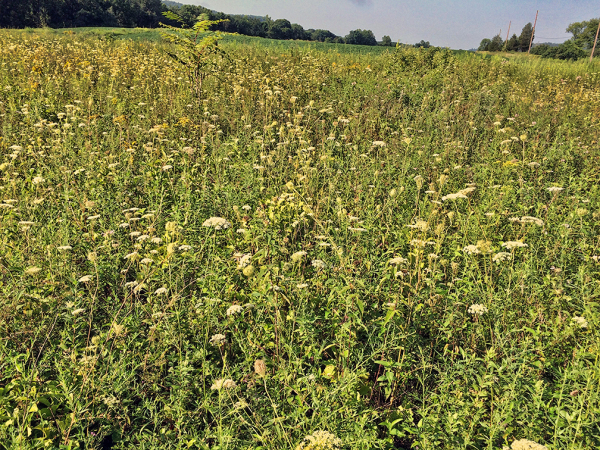
BB and I drove south, through the Delaware Water Gap, the wild parsley and the fallow fields very beautiful in the noonday light.
Eventually, we cut east and got to the anthracite mountains. Underground mining was abandoned here after the Knox Mining Disaster in 1959, but strip mining still goes on. We passed several strip mines along Highway 209, but they were set behind strips of forest, too far from the road for photographs. The coal looked like this:
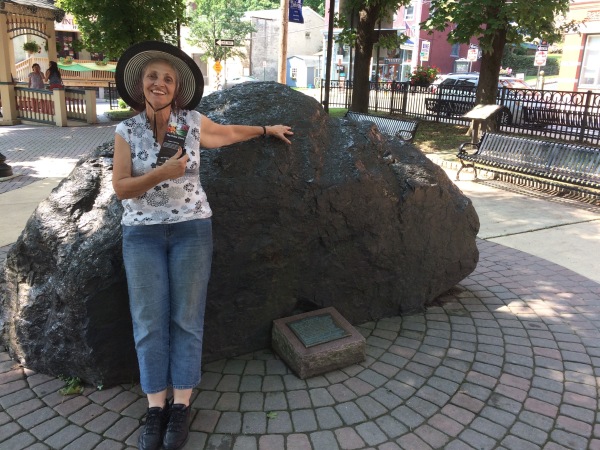
Palmerton is not actually a coalmining town.
It’s the site of a massive zinc-extraction operation that used coal for fuel and the numerous waterways hereabouts for transportation and distillation. The town was created in the early 20th century to provide zinc workers with housing and the other services people need to carry out lives.
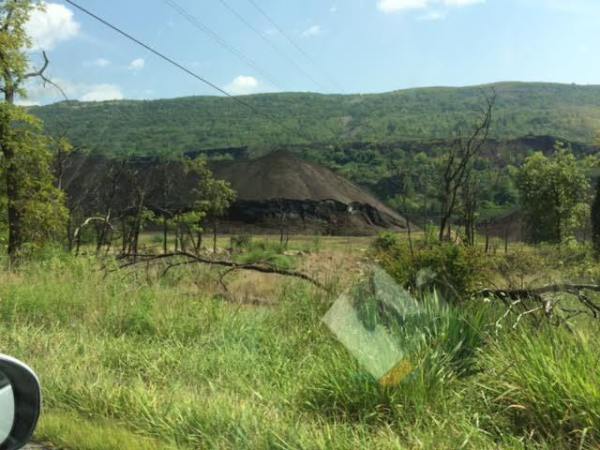
Palmerton is a superfund site! At one time, it was completely surrounded by mountains and mountains of black slag. The slag is still there today though it no longer completely encircles the town:
BB took me to the Chamber of Commerce where the nicest man in the world took us through a tiny, homemade exhibit on Palmerton. The nicest man in the world had had some kind of spine surgery that made his head butt forward on a direct parallel with his shoulders, kinda like a camel’s. He reminded me so much of my grandfather that I thought my heart would break.
We tried to walk around a bit, but it was 90° by then and breezeless. We ducked into what the nicest man in the world had told us was a Telephone Museum, another home-fab accumulation of the stuff some Palmerton telecommunications enthusiast had probably been collecting in his garage for ages before some Chamber of Commerce perp had an idea: I know! Let’s turn it into an exhibit!
The woman who ran the museum was the second-nicest person in the world, so blonde and plump and pretty and kind and… enthusiastic.
Impeccably made-up.
Why? I wondered. Wouldn’t that be one of the few advantages to living in a superfund site? While you’re waiting for your cancer diagnosis? That you don’t really have to worry what you look like?
I had a terrific time hanging out with BB, but by the time I got home, I was so deep in melancholy that it was all I could do to keep myself from weeping.
I couldn’t tell you why.
Something to do with the gallantry of people trying to live happy lives under circumstances that would never add up to happiness for me, I guess.
Something to do with time. The terrible scars that time leaves on places, on people. How once the scars are there, people never think about the damage that created those scars. What an ugly place, they think, or, What an ugly person. As though that person, that place, only existed in the duration of one jaded eyeblink.
What’s the name for that feeling? Poignancy?
I am awash in poignancy. I am surrounded by great slag heaps of poignancy.
BB discovered Palmerton when he was doing the Appalachian Trail, which loops off Blue Mountain and down into the Lehigh Valley there.
When I got home and did the research, I realized I knew Palmerton from before, too. Well. Not Palmerton exactly. But places very close to it.
Because I’d been a big, big, big John O’Hara fan growing up.
And Palmerton is only 40 miles north of Pottsville, O’Hara’s fictional Gibbsville.
###
I couldn’t tell you why I liked John O’Hara so much when I was 12. Obviously, O’Hara’s favorite themes—class, social status, money, alcohol abuse, deeply repressed sexual urges—went right over my head.
I think it was something about the way O’Hara wrote dialogue. It left out more than it included, and that intrigued me. Seemed to me at the age of 12 that people in real life very seldom talked about the things that were important and that this was something fiction almost always got wrong. In fiction, people were always talking about the important things. But people didn’t in real life.
O’Hara’s characters never talk about important things.
Instead their conversation is steeped in ghastly provincialism. I suppose you could call O’Hara a kind of Zola of the American petit-bourgeoisie. His short stories, which are really excellent, amount to a secret history of the lives of white American males in the 1940s and 1950s.
O’Hara wrote about stuff that had happened approximately 40 years before I was born. Then, of course, 40 years seemed like an incalculably long amount of time—first Caesar invaded omnia Gallia, and then it was 1915—but 40 years ago from now is 1978, and I remember 1978 with Technicolor clarity.
(I try to keep that in mind when I’m hanging out with much younger friends: that events of profound relevance to me, to them are marginalia on a crumbling, moldy page.)
I think people do still read writers like Raymond Carver who started off by imitating O’Hara.
But nobody reads O’Hara anymore. He’s one of those writers who’s been completely forgotten.
###
Anyway.
Palmerton is in (I kid you not) Carbon County.
BB and I drove south, through the Delaware Water Gap, the wild parsley and the fallow fields very beautiful in the noonday light.

Eventually, we cut east and got to the anthracite mountains. Underground mining was abandoned here after the Knox Mining Disaster in 1959, but strip mining still goes on. We passed several strip mines along Highway 209, but they were set behind strips of forest, too far from the road for photographs. The coal looked like this:

Palmerton is not actually a coalmining town.
It’s the site of a massive zinc-extraction operation that used coal for fuel and the numerous waterways hereabouts for transportation and distillation. The town was created in the early 20th century to provide zinc workers with housing and the other services people need to carry out lives.
Palmerton is a superfund site! At one time, it was completely surrounded by mountains and mountains of black slag. The slag is still there today though it no longer completely encircles the town:

BB took me to the Chamber of Commerce where the nicest man in the world took us through a tiny, homemade exhibit on Palmerton. The nicest man in the world had had some kind of spine surgery that made his head butt forward on a direct parallel with his shoulders, kinda like a camel’s. He reminded me so much of my grandfather that I thought my heart would break.
We tried to walk around a bit, but it was 90° by then and breezeless. We ducked into what the nicest man in the world had told us was a Telephone Museum, another home-fab accumulation of the stuff some Palmerton telecommunications enthusiast had probably been collecting in his garage for ages before some Chamber of Commerce perp had an idea: I know! Let’s turn it into an exhibit!
The woman who ran the museum was the second-nicest person in the world, so blonde and plump and pretty and kind and… enthusiastic.
Impeccably made-up.
Why? I wondered. Wouldn’t that be one of the few advantages to living in a superfund site? While you’re waiting for your cancer diagnosis? That you don’t really have to worry what you look like?
I had a terrific time hanging out with BB, but by the time I got home, I was so deep in melancholy that it was all I could do to keep myself from weeping.
I couldn’t tell you why.
Something to do with the gallantry of people trying to live happy lives under circumstances that would never add up to happiness for me, I guess.
Something to do with time. The terrible scars that time leaves on places, on people. How once the scars are there, people never think about the damage that created those scars. What an ugly place, they think, or, What an ugly person. As though that person, that place, only existed in the duration of one jaded eyeblink.
What’s the name for that feeling? Poignancy?
I am awash in poignancy. I am surrounded by great slag heaps of poignancy.

