Never Enuff Scott & Zelda! Plus TAXBWANA!
Jan. 4th, 2023 10:39 am![[personal profile]](https://www.dreamwidth.org/img/silk/identity/user.png) mallorys_camera
mallorys_cameraIt rained hard all day yesterday.
Today, we have pea soup fog and the promise of more rain later this afternoon. If I was virtuous, I’d scamper out for an invigorating tromp before the skies open. But the jury is always out on the question of my virtue.

Yesterday was the first of two mind-numbingly dull tax preparation classes we’re forced to attend if we want to join the ranks of the few, the proud, the TaxBwanas.
Every year, the number of TaxBwana volunteers gets smaller and smaller, and honestly, I think these mandatory classes have a lot to do with that.
They are unbelievably boring.
One could argue, I suppose, that the tax system itself is unbelievably boring.
But this isn’t true. The tax system functions as a kind of coral reef of just about every government policy over the past 100 or so years, and so it is quite fascinating. It’s only boring in the same sense that the Talmud is boring or DNA is boring.
The challenge of all education is to capture the fascination.
And TaxBwana Central fails miserably.
You know that movie, The Manchurian Candidate? Frank Sinatra is really in a conference room having his brain washed by the North Koreans, but he thinks he’s at a meeting of the New Jersey Ladies’ Garden Club?
That’s what these tax preparation classes are like.
I think I am in a TaxBwana class.
But really, I’m in a conference room having my brain washed by Vladimir Putin, who has somehow infiltrated the Internal Revenue Service.
For six hours. Without a break!

In other news, I finished West of Sunset, Stewart O’Nan’s novel about Scott Fitzgerald’s final three years. (Thanks,suzanna_o.)
I liked it.
Pretty accurate depiction of Fitzgerald’s second act, the one he wanted to pretend couldn’t possibly exist because it involved so much personal mortification.
If he’d taken better care of himself, there might have been a third act in which Fitzgerald surpassed the lofty heights of his much-publicized Act I, thanks to a new-found humility.
But there wasn’t. Fitzgerald died of a heart attack at age 44. Being a drunk with a serious Benzedrine habit who smokes four packs of cigarettes a day will do that to you.
In the last three years of his life, Fitzgerald was fussy, pedantic, and enormously self-pitying.

Happens that I know a great deal about Fitzgerald’s life, which is far more interesting to me than any of his immensely over-written novels.
Yes, yes—Fitzgerald’s prose style: very fine!
So we beat on, boats against the current, borne back ceaselessly into the past. Best closing line ev-ah!!!
But The Great Gatsby has no connective tissue whatsoever. The characters are paper dolls the author poses against mounds of gorgeous prose.
You wanna keep the gorgeous prose to about 20% if you’re writing a novel. What you’re after is actually serviceable prose. Any time you’ve written a sentence that is so beautiful and complex that the reader has to stare at it for 10 seconds to grok its meaning, you are essentially throwing your reader out of your story.
Throwing the reader out of your story is a way of breaking the fourth wall.
It’s a technique, in other words. And useful when deployed sparingly.
Fitzgerald never deploys it sparingly.

Of course, you can never think of Scott without thinking of Zelda.
They’re the Jazz Age Romeo and Juliet, after all.
O’Nan deals with the relationship between Scott and Zelda pretty well, I thought, letting readers draw for themselves the dotted lines between the couple’s rare meetings after Zelda’s schizophrenia diagnosis and Scott’s subsequent bouts of self-destructive behavior.
For all sorts of reasons, the real-life Zelda is a much more interesting character than the real-life Scott, with a genuinely strange, original, and wee bit scary way of expressing herself.
Did Scott drive Zelda mad?
I kind of think the marriage drove her mad. The rootlessness. Scott was so immensely wrapped up in himself that he failed to see it was the stability of Zelda’s life while she was growing up that provided the anchor for her peculiar high-wire act. Without that stability, she was completely off balance.
There was also Scott’s delegation of Zelda to the strictly ornamental and his insistence that he was the talented one (even while he was plagiarizing her journals and her letters to beef up his prose.)
I think it’s quite likely that had Zelda married one of her Montgomery beaux and stayed in Alabama, she would have become increasingly eccentric as she grew older, but the boat she piloted would never have slipped its moorings to beat ceaselessly against any currents.
Today, we have pea soup fog and the promise of more rain later this afternoon. If I was virtuous, I’d scamper out for an invigorating tromp before the skies open. But the jury is always out on the question of my virtue.

Yesterday was the first of two mind-numbingly dull tax preparation classes we’re forced to attend if we want to join the ranks of the few, the proud, the TaxBwanas.
Every year, the number of TaxBwana volunteers gets smaller and smaller, and honestly, I think these mandatory classes have a lot to do with that.
They are unbelievably boring.
One could argue, I suppose, that the tax system itself is unbelievably boring.
But this isn’t true. The tax system functions as a kind of coral reef of just about every government policy over the past 100 or so years, and so it is quite fascinating. It’s only boring in the same sense that the Talmud is boring or DNA is boring.
The challenge of all education is to capture the fascination.
And TaxBwana Central fails miserably.
You know that movie, The Manchurian Candidate? Frank Sinatra is really in a conference room having his brain washed by the North Koreans, but he thinks he’s at a meeting of the New Jersey Ladies’ Garden Club?
That’s what these tax preparation classes are like.
I think I am in a TaxBwana class.
But really, I’m in a conference room having my brain washed by Vladimir Putin, who has somehow infiltrated the Internal Revenue Service.
For six hours. Without a break!
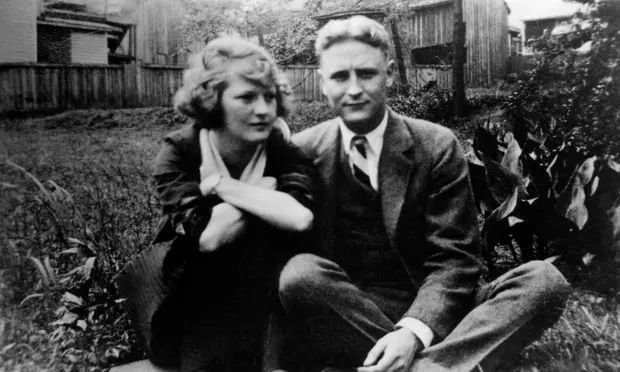
In other news, I finished West of Sunset, Stewart O’Nan’s novel about Scott Fitzgerald’s final three years. (Thanks,
suzanna_o.)I liked it.
Pretty accurate depiction of Fitzgerald’s second act, the one he wanted to pretend couldn’t possibly exist because it involved so much personal mortification.
If he’d taken better care of himself, there might have been a third act in which Fitzgerald surpassed the lofty heights of his much-publicized Act I, thanks to a new-found humility.
But there wasn’t. Fitzgerald died of a heart attack at age 44. Being a drunk with a serious Benzedrine habit who smokes four packs of cigarettes a day will do that to you.
In the last three years of his life, Fitzgerald was fussy, pedantic, and enormously self-pitying.
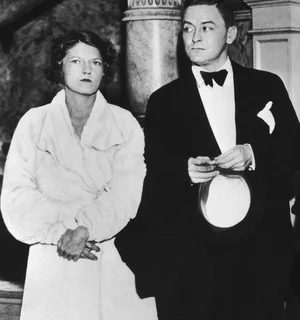
Happens that I know a great deal about Fitzgerald’s life, which is far more interesting to me than any of his immensely over-written novels.
Yes, yes—Fitzgerald’s prose style: very fine!
So we beat on, boats against the current, borne back ceaselessly into the past. Best closing line ev-ah!!!
But The Great Gatsby has no connective tissue whatsoever. The characters are paper dolls the author poses against mounds of gorgeous prose.
You wanna keep the gorgeous prose to about 20% if you’re writing a novel. What you’re after is actually serviceable prose. Any time you’ve written a sentence that is so beautiful and complex that the reader has to stare at it for 10 seconds to grok its meaning, you are essentially throwing your reader out of your story.
Throwing the reader out of your story is a way of breaking the fourth wall.
It’s a technique, in other words. And useful when deployed sparingly.
Fitzgerald never deploys it sparingly.

Of course, you can never think of Scott without thinking of Zelda.
They’re the Jazz Age Romeo and Juliet, after all.
O’Nan deals with the relationship between Scott and Zelda pretty well, I thought, letting readers draw for themselves the dotted lines between the couple’s rare meetings after Zelda’s schizophrenia diagnosis and Scott’s subsequent bouts of self-destructive behavior.
For all sorts of reasons, the real-life Zelda is a much more interesting character than the real-life Scott, with a genuinely strange, original, and wee bit scary way of expressing herself.
Did Scott drive Zelda mad?
I kind of think the marriage drove her mad. The rootlessness. Scott was so immensely wrapped up in himself that he failed to see it was the stability of Zelda’s life while she was growing up that provided the anchor for her peculiar high-wire act. Without that stability, she was completely off balance.
There was also Scott’s delegation of Zelda to the strictly ornamental and his insistence that he was the talented one (even while he was plagiarizing her journals and her letters to beef up his prose.)
I think it’s quite likely that had Zelda married one of her Montgomery beaux and stayed in Alabama, she would have become increasingly eccentric as she grew older, but the boat she piloted would never have slipped its moorings to beat ceaselessly against any currents.


